

Subscriptions, Power, and Resistance

You may have heard that it’s Resist and Unsubscribe February.
The idea, dreamed up by Scott Galloway, is to hit the Trump administration through economic means by targeting companies (Apple, Google, X, Meta, Uber, etc.) that provide the backing and who have sway over the administration. In effect, it’s a version of a general strike. A ticker with the project’s influence via market cap is the first thing you see on the webpage.
General strikes are nothing new. Neither are boycotts. Yet, there does feel like there’s something novel about this. Part of it has to do with the leader.
Listening to Galloway talk about the project, you get the sense that he’s building the airplane as it’s flying. It also a different type of plain. Galloway’s not overly ideological. His perspective seems to be purely capitalist—what’s going to cause the maximum impact with the minimum overhead? While other orgs are working to generate buy-in, Galloway confesses that he has no time for long winded calls. He’s trying to muscle this through.
Yet, true to his brand, there’s more than a bit of self-improvement built in. Through various appearances, he’s able to name drop the Montgomery Bus Boycott, a call from an anonymous CEO, and his outrageous Uber bill within the space of 10 minutes. It’s not just about the fate of the US, it’s also about realizing how much money you’re spending. A quick editorial note to say that someone of Galloway’s wealth has jaw-dropping bills, which he isn’t trying to hide.
This is where Resist and Unsubscribe does feel like something new. General strikes and boycotts are not about buying. This is about buying back.
Listening to Galloway and thinking about unsubscribing as a form of resistance really reflects back the new capital moment that we’re in. Our subscriptions guarantees companies a floor of wealth that enables their astronomical evaluations so long as their base grows. We are also excluded from the decision making of companies. That’s for stock holders, not subscribers. For this reason, a downtick in projections cuts deeper because we’re the floor for the potential of new wealth.
At the same time, we’ve forked over our privacy, property, and decisions over to the companies. A streaming services doesn’t let us own the film. Nor do we get to choose what’s on that week. All the while surveillance capitalism makes sure we’re hooked in for as long as possible. Oh, yeah, and they’re showing ads again.
In theater, the history of the subscription goes back to the end of the 19th century and the Théâtre Libre in France. It was started by André Antoine, a gas clerk, when a spate of new plays by French playwrights were being denied space for productions at the Comédie-Française, France’s state-sponsored theatre. If you want a sense for how powerful the Coméidie-Française is to this day if you are a member of their company and you appear in a film, you have to list “Coméidie-Française” after your name. They own you.
The plays that Antoine was interested in, though, were essentially blocked because of how they challenged the system. These were plays by Naturalist writers like Émile Zola, a novelist and playwright, who became known as the “father” of Naturalism. Zola had a particular view of what literature should do. Rather than demonstrating the power of the state or exotic lands in sweeping melodramas, he thought that playwrights should be social pathologists—seeking to find out what the ills of society were and bringing them to light.
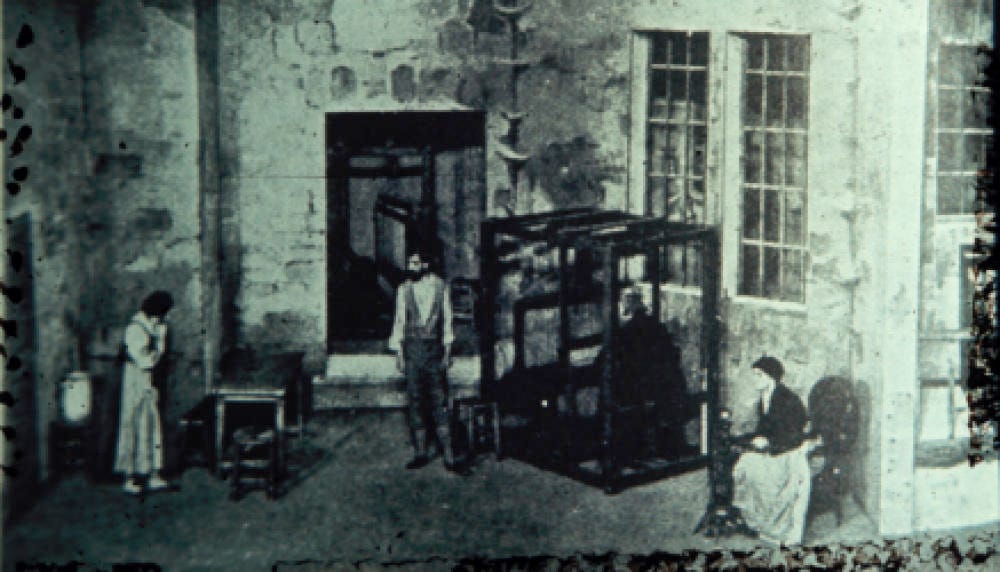
Unsurprisingly for the 1880s, a lot of these Naturalistic works focused on the effects of industrialization on the working classes. My favorite work by Zola is the novel Germinal, the story of a proto-socialist uprising among French coal miners. Zola’s writing is bracing, detailed, and unencumbered in its depiction of people on the edge of society.
With the Coméidie-Française off limits, Antoine had to get creative, so he created the idea of a club, not a theatre, which would produce the plays of Zola, Hauptmann and others. Rather than paying for tickets, then, the audience purchased a stake in the club—a subscription—evading the censors and allowing the show to, quite literally, go on.
The idea of using a private club to get around the official policies is pretty effective. As someone who grew up in a dry county, it was an official “supper club” that was the first place that could serve drinks. When indoor smoking was banned in Minnesota years back, a number of bars magically became theaters, because there was no ban on smoking on stage.
It’s obviously a far cry from your Netflix account to Antoine’s Théâtre Libre. But the use of subscriptions in both places shows us how to both get around and instantiate power.
Pulling the plug on your subscription is an act of resistance through self-determination: making your own choices about what you want to devote yourself and your capital to.
If Galloway’s plan has efficacy is because it has identified a pressure point that anyone can push on. And, at the same time, it suggests ways that we can make our own choices about our relationship to power, perhaps not too unlike the first subscribers to Naturalist theaters.
Because Antoine’s idea and the Théâtre Libre didn’t stay in Paris. It influenced the Independent Theatre in Ireland and the Freie Bühne in Germany. Soon, these little clubs began to kick up, and with them new writers—Ibsen, Shaw, Yeats—whose ideas would mark the turn of the 20th century and into our present day.
As for unsubscribing, if the billionaire class have their own subscription service to Trump through corruption, then the very least we can do is not give them our money to spend.